Cross-Platform Architecture · Product Design · User-Experience Design
Scaling multi-role registration across web and mobile apps.
COMPLEXITY
in the history.
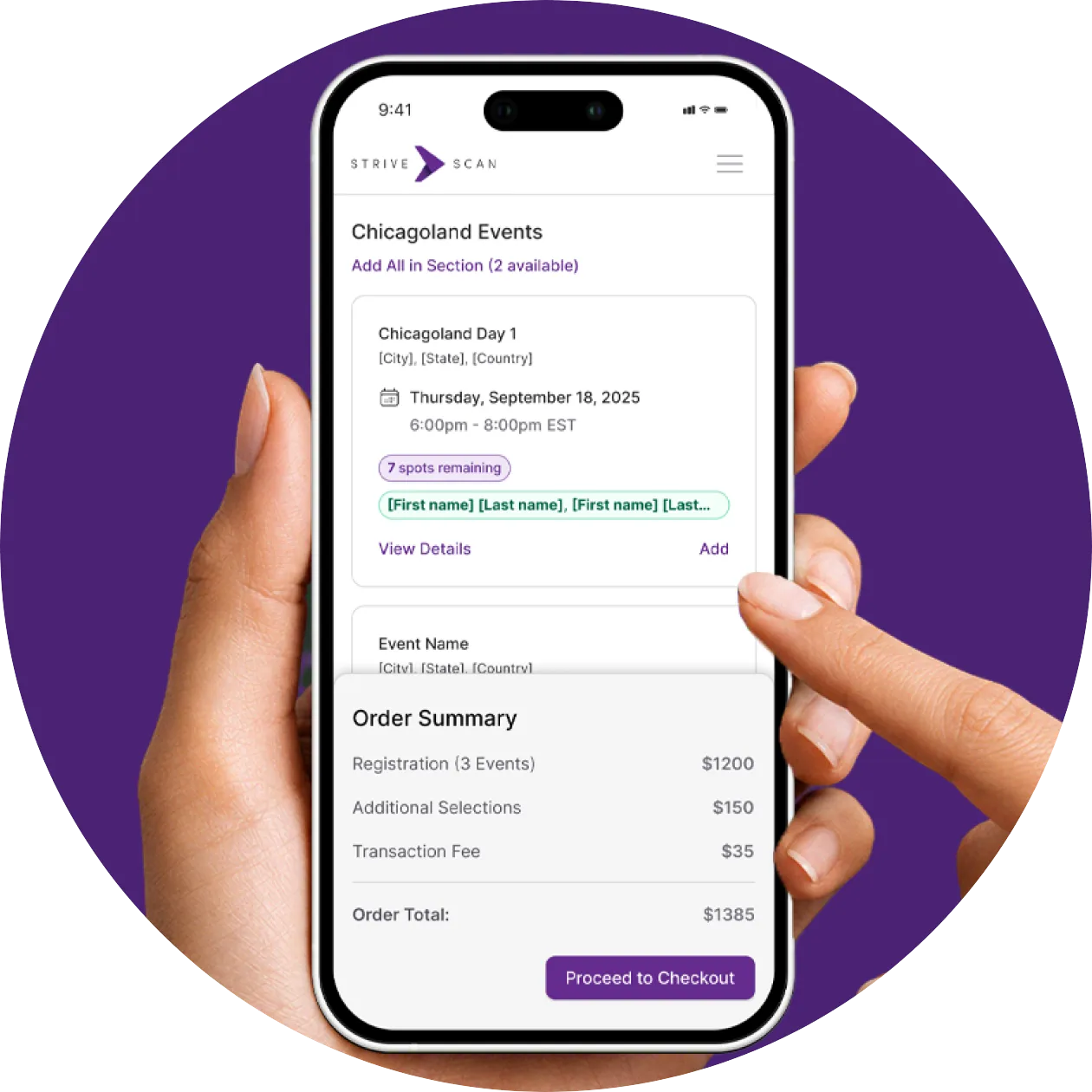
StriveScan is a higher education recruitment platform that connects high school students with colleges. The platform enables student scanning, post-event engagement, and institutional reporting. As StriveScan expanded, so did the operational complexity of how institutions register, pay, manage permissions, and access reporting across multiple fairs.
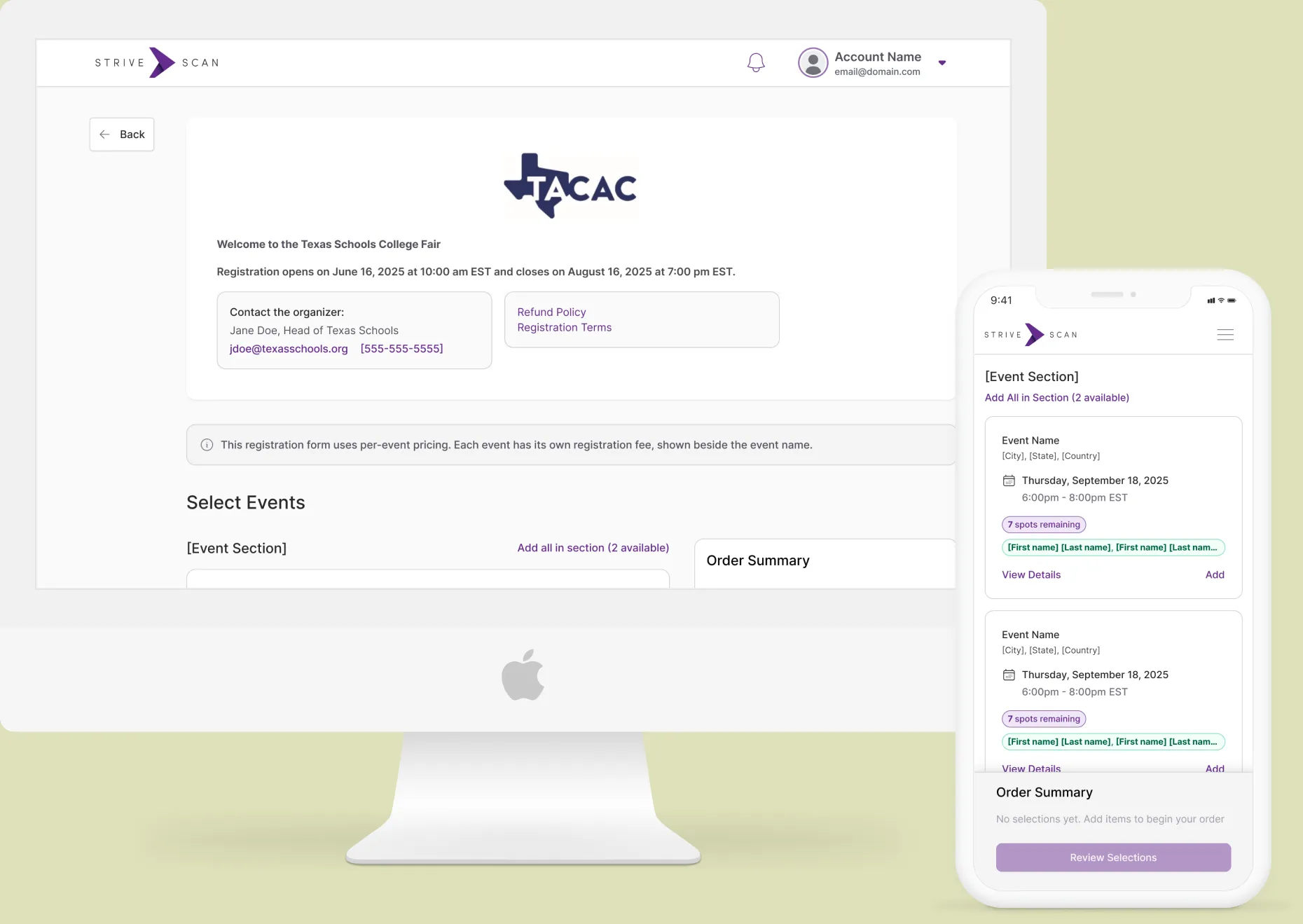
StriveScan partnered with Arro Labs to redesign and re-architect their Institution Registration experience into a scalable, role-aware system that could support growth without increasing operational friction.




Client Quote
Arro Labs brought clarity and structure to a highly complex registration workflow. Their team translated our operational requirements into an intuitive, scalable experience for Super Admins, Fair Hosts, and College Reps alike.

Complexity, Modeled
Finding clarity.
ONE FORM BECOMES MANY
Institution Registration had evolved from a single form flow into a distributed system. Over time, workflows had become tightly coupled but inconsistently modeled in the UI. Financial states, permissions, and reporting logic formed complicated mental models, creating friction for admins and fair hosts.
A CLEARER FOUNDATION
Arro Labs was engaged to bring clarity to the system model and redesign the product experience around that foundation.
Our Process
Creating a plan.
FULL ECOSYSTEM MAPPING
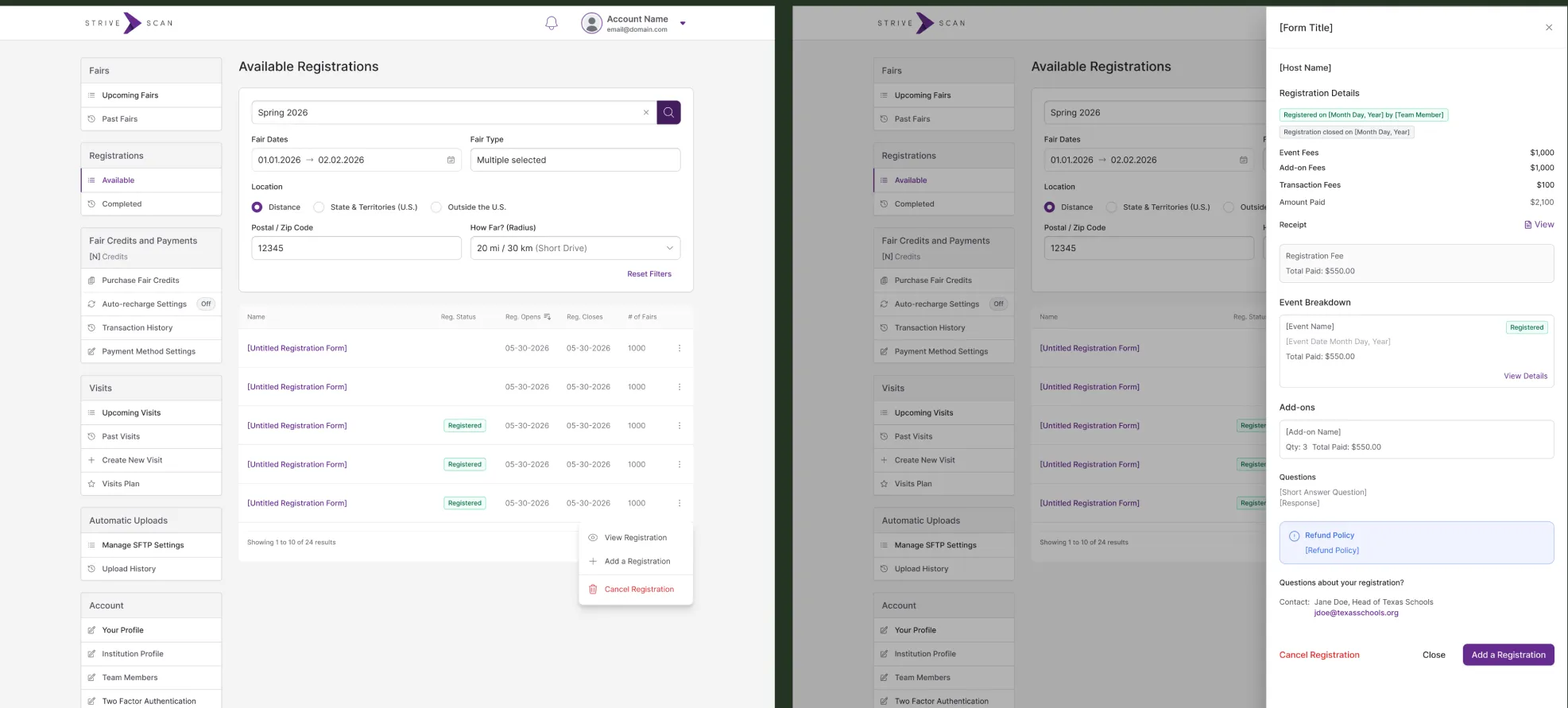
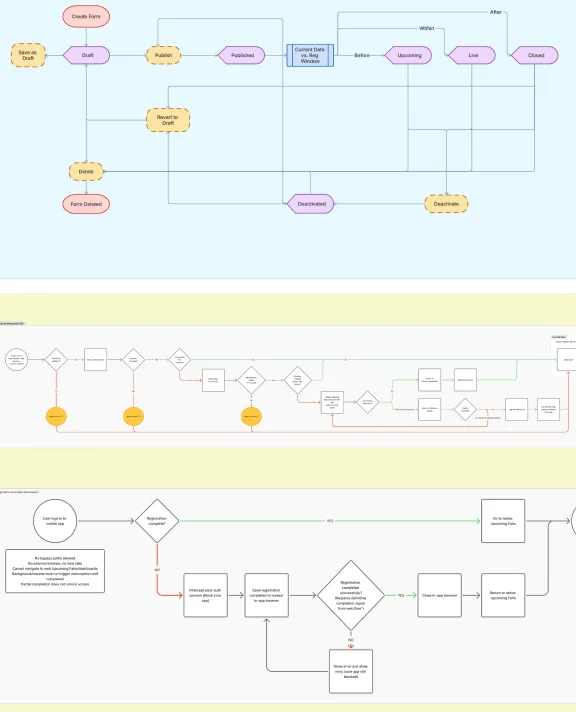
We mapped data ownership, transaction states, and permission tiers across admins, fair hosts, college reps, and students. That map drove a redesigned Dashboard Index that puts form management, transaction oversight, and fair reporting in one place.
DESIGN SYSTEM IMPLEMENTATION
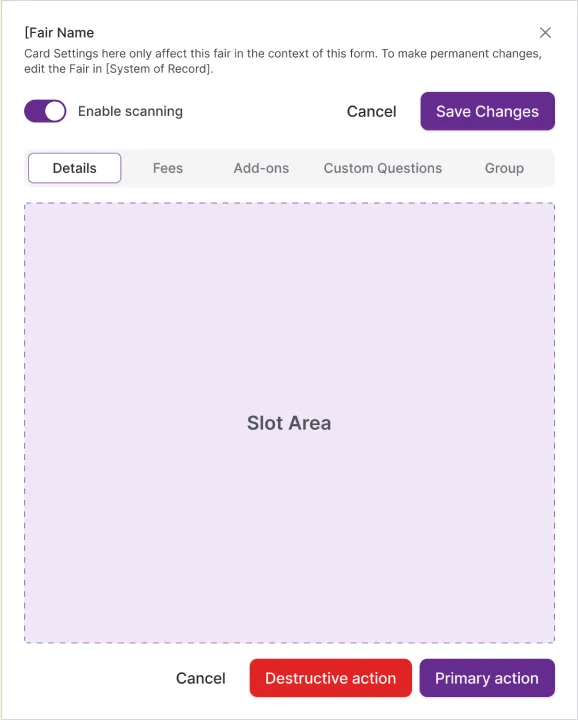
We built the architecture into a tailored Flux UI component system, so financial states, dashboard modules, and permission logic became reusable patterns instead of one-off screens. New features now layer onto that base rather than reintroducing the fragmentation the redesign removed.
FINANCIAL TRANSPARENCY
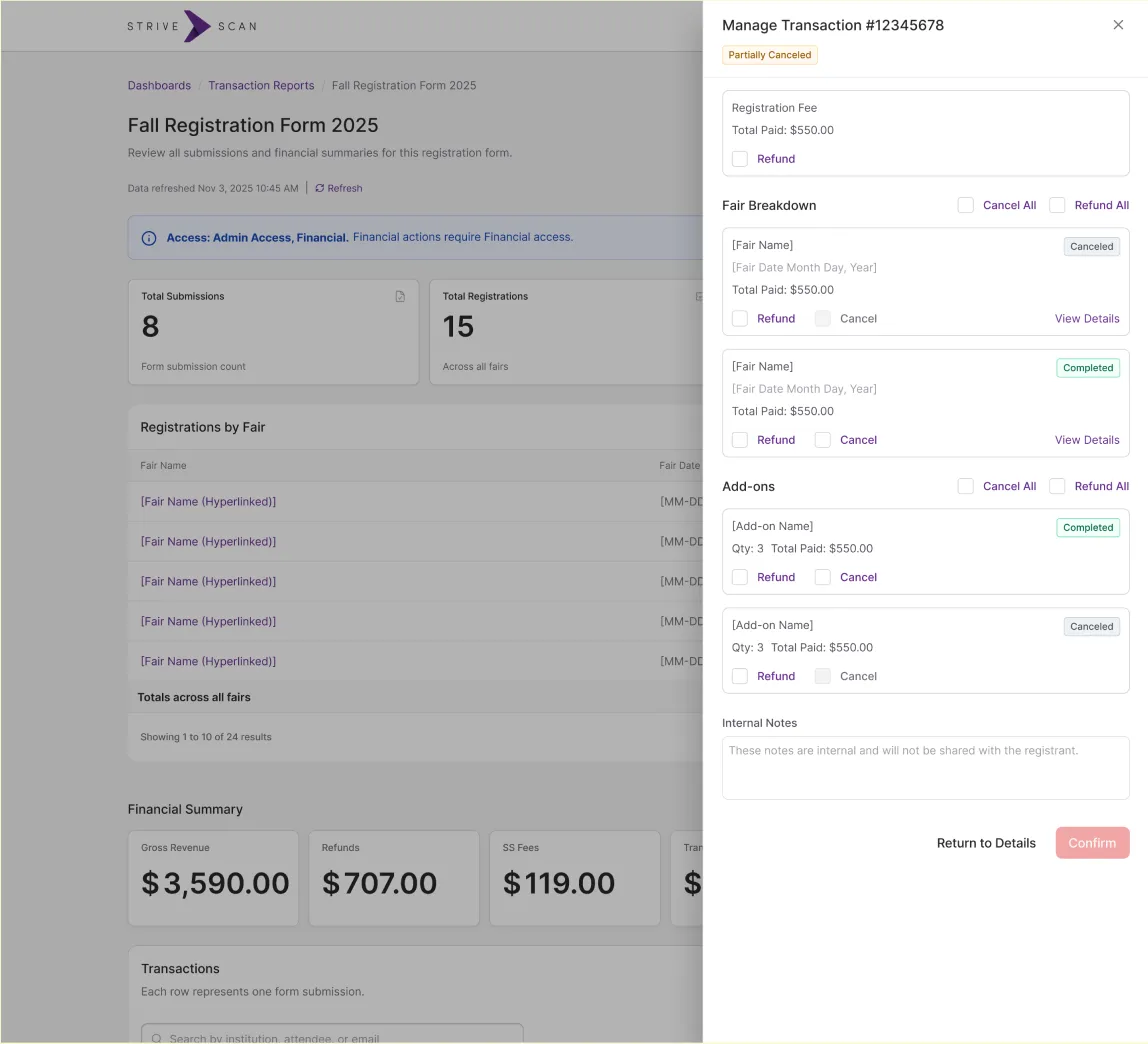
We defined a fixed set of transaction states and refund rules, so revenue reporting reflects what actually happened and ambiguous financial actions can't occur. Flyout preview panels let users review and manage records in context, without leaving dense tables.
Built to Scale
Foundational, not fragile.
ONE UNIFIED SYSTEM
Institution Registration is now a unified product system with clear ownership boundaries and predictable financial logic, replacing what had been a distributed set of tightly coupled but inconsistently modeled workflows.
WHAT CHANGED
The redesign delivered a centralized dashboard indexing across forms and fairs, transparent transaction states and refund constraints, secure role-based sharing and financial controls, real-time scan unlocking tied to verified registration, and scalable multi-fair pricing and configuration. What was once operationally fragile is now foundational infrastructure.
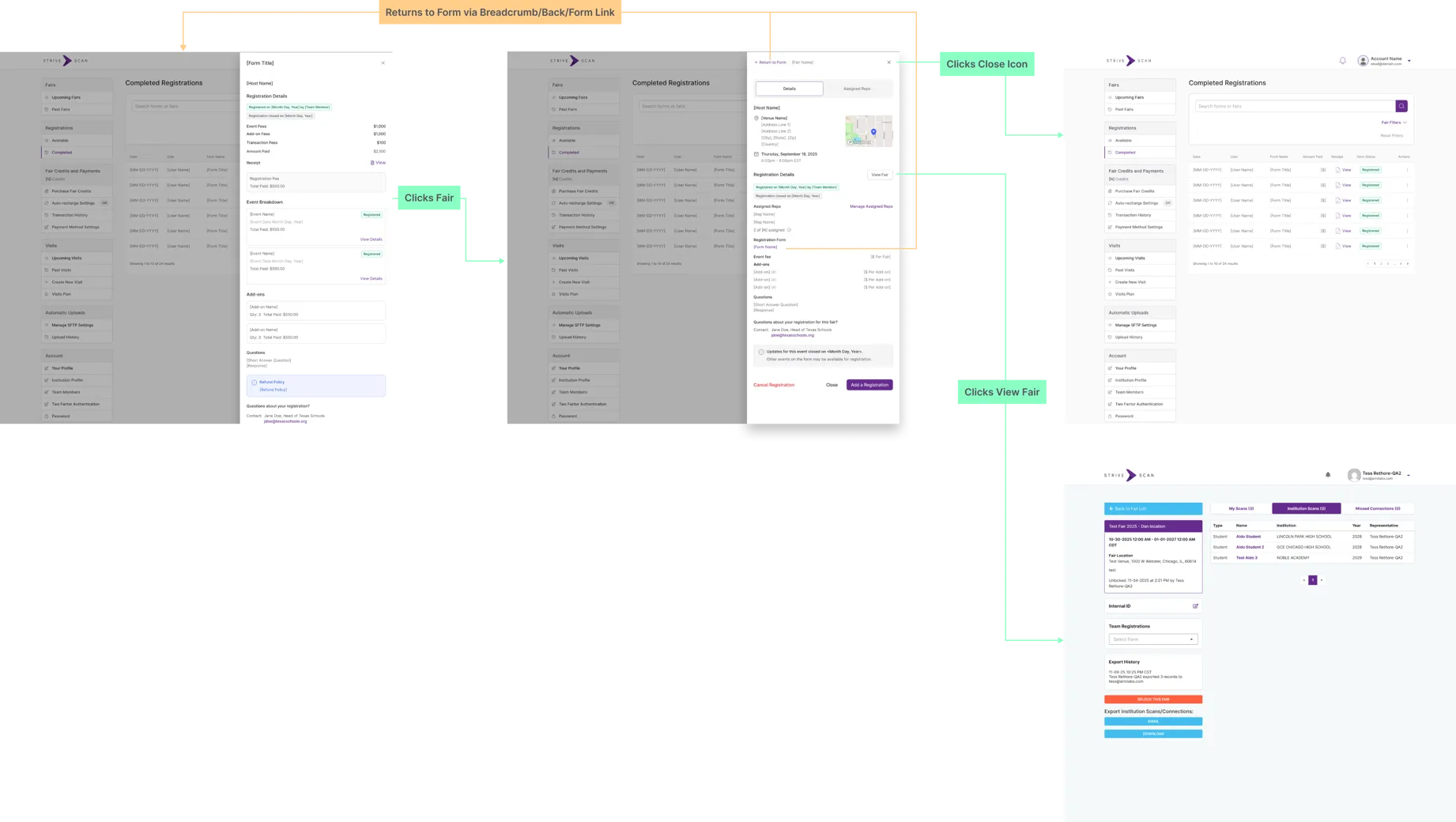
Registrations and fairs link both ways, so you can follow one to the other and back without restarting. Every jump has a named return, and the deeper fair records open as their own page instead of stacking another layer on top.
A Shared Source of Truth
Aligned by design.
ACROSS TEAMS
Beyond surface improvements, the redesigned system reduced operational ambiguity across teams. Financial stakeholders can reconcile revenue with confidence, fair hosts can distinguish between registered, attended, and unregistered institutions without cross-referencing multiple reports, and college reps experience clearer pricing logic and predictable registration behavior.
BUILT FOR GROWTH
Scanning access, payment state, and dashboard reporting now operate from a shared source of truth — strengthening internal efficiency and improving trust in the platform's data accuracy during high-volume event cycles. Institution Registration evolved from a collection of connected features into a modeled, extensible system that supports StriveScan's continued growth.